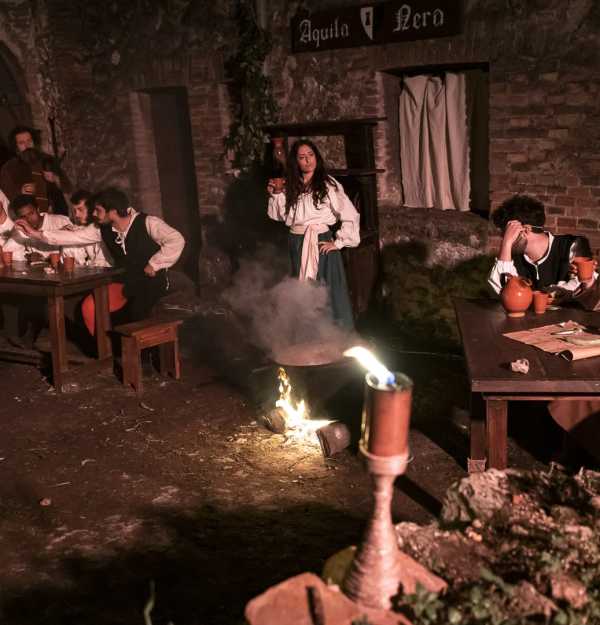
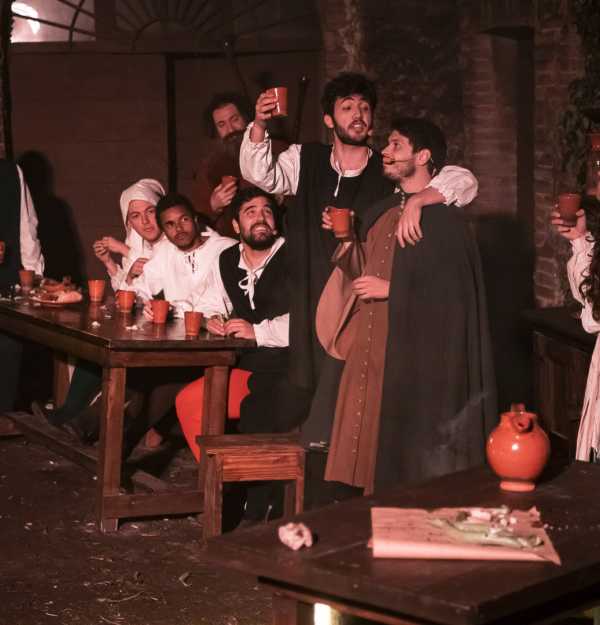
The Locanda and the Taberna - as we know them from medieval literary descriptions - are the result of a slow evolution of the concept of travel in the Middle Ages.
Already in Tacitus' time it was forbidden to refuse hospitality to pilgrims, but the free one in Europe was usually limited to three days (hence, perhaps, the popular saying: "the guest is like fish: after three days it stinks").
Medieval taverns have names but also symbols that also illiterates can understand: hanging barrels, tree branches, shields or swords that were common throughout Europe.
The wine in the taberna
What did you drink in the Middle Ages in Narni? Wine: strong and spicy. In the medieval statutes of 1371 the administration of wine is carefully regulated, along with the penalties for those who alter its composition. It is curious the link between the tradition of placing outside your inn an olive branch or other plant if you want to sell new wine, and the popular name attributed to the glass of wine: the "foglietta", i.e. a little leaf.
The art of Tabernacles in Narni plays a very important role. Among the most interesting laws we cannot fail to mention at least one:
"... that no one goes around the taverns of Narni or the committee after the first chime of the bell that rings at night for the custody of the municipality..."
... that no one goes around the taverns of Narni or the committee after the first chime of the bell that rings at night for the custody of the municipality...
Medieval statutes