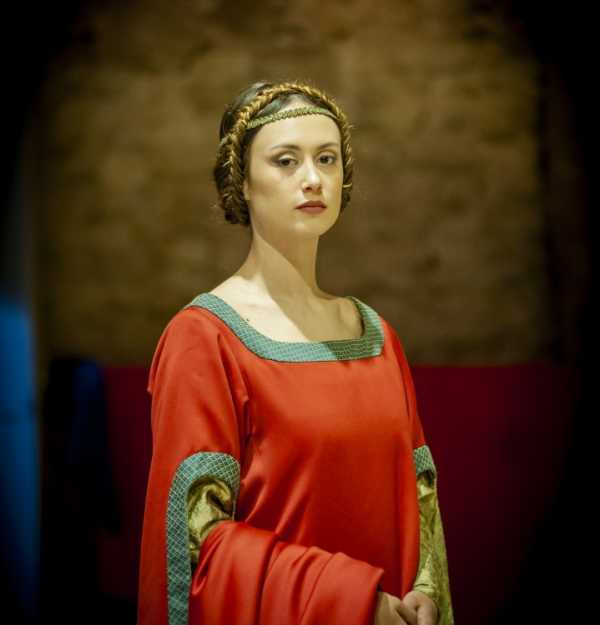
In the Middle Ages, clothing was delegated to specialized personnel, organized in guilds. The tailor, in addition to cutting and assembling fabrics, specializes in the processing of fabrics and in their decoration, in harmony with everything that the Law and the Rules of Art imposed.
The production of the tailors was reserved for the nobles and the rich bourgeoisie, while for the rest of the population clothing was a purely homemade product, derived from patterns most often consolidated by tradition.
In the medieval man's wardrobe everything is talking: the fabrics, the shapes, the cut, the accessories, the colors and the way of wearing. Dressing more richly or modestly than was customary in one's social category could be a sin of pride or a demonstration of decadence. It is therefore clothing that shows the place of the individual within a group and the position of this in society, according to a rigid and binding sign system.
In Narni, in 1968 an animated representation of the past is brought into play: Historical Parade for St. Giovenale. At first, the historical clothes were hired from the studios of Cinecittà, but then they were made directly by the Terzieri, creating one of the great and qualified traditions that the festival has generated: the tailoring.
Studies were started on local sources, proposing a new structure of the Historical Procession and a new approach to the realization of vintage clothes and its scope and reference period: central Italy and the second half of the 14th Century with particular reference to 1371, year of re-edition of the Municipal Statutes. Careful studies were carried out through local iconography and archival documents.
It is worth mentioning the analysis of the works of the Master of Narni of 1409, but also of many other painters of central Italy, without forgetting the study of the Suntuarie Laws and the "Statute Illustrissimae Civitatis Narniae". The latter was the source that more than others supported the research on clothing of Narni and provided precise information about the "official" clothes of the authorities.