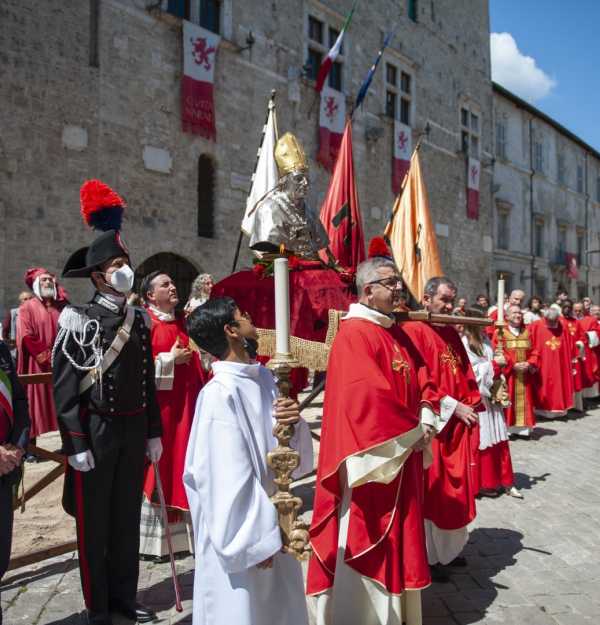
Despite the efforts of the Church to suppress religious traditions of pagan origin, these continue to survive in the celebrations that followed the rhythms of an ancient popular calendar. In medieval times, as in Narni of the fourteenth century, the resistance of "primitive" customs derives from festivals of Umbrian and Roman origin. Alongside a profane aspect, the time of the feast participates in the worship of the sacred through the commemoration of moments of the life of Christ or of the Virgin, which are articulated in the feast day according to two moments, one linked to the sacred aspect and the other of a playful and profane character. The liturgical calendar festivities are related to those of a popular calendar, often linked to agricultural practices. In the rural world time is marked by the annual transformations of nature and ancient popular cults. The festivities of the liturgical calendar are "popular festivals", linked to events of a religious nature, but lived according to folkloric interpretations of the occurrence of particular events.
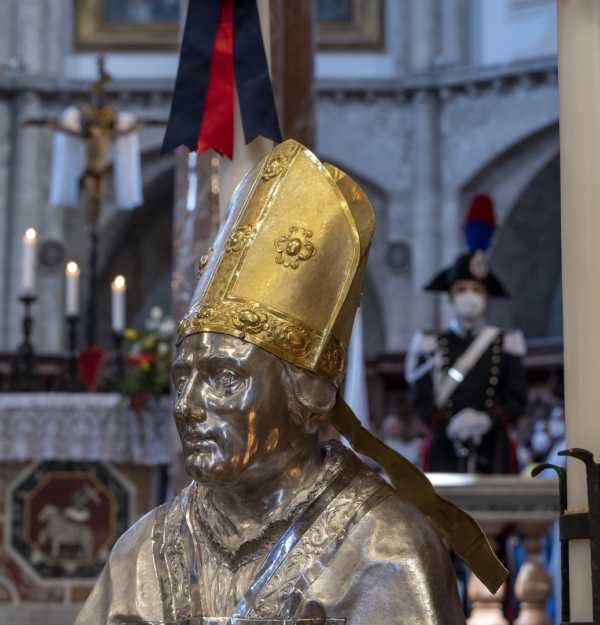
In particular, in Narni no party exceeded for pomp and duration what was held in Narni in honor of Blessed Giovenale Bishop and Martyr, protector of the city. According to tradition, Giovenale, who lived in the 4th Century, was an african physician. Filatelfia, a roman noblewoman, sent him to Narni where the pagan cults were still strongly rooted. His work as first Bishop completed the transformation of Christian Narni, converting and baptizing many people. Remarkable were the episodes in which he manifested Christian charity: the people acclaimed him when, on the occasion of the descent of the Carpi during the siege of the city, he gathered in prayer around his bishop asking for the salvation and protection. That was when a violent storm damaged the assailants who fled terrified. Giovenale replied the miracle of the Eucharist and consecrated wine. Died 7 August 376 and is represented by the classical iconography with the attributes of Bishop and the palm of martyrdom. The Codex Bernense of the Martyrology Hieronymian remembers him on May 3 as a martyr.
The tomb of Juvenal, in the Cathedral of Narni, was a destination of pilgrimages in antiquity. His feast traditionally takes place on May 3, but in local worship a second date honors the Saint every August 7. In the 9th Century, the body of Juvenal, buried in Narni, was stolen along with that of Saints Cassius and Fausta, transported to Lucca and later returned to Narni and placed in the Cathedral where it is currently preserved.